Buying a Property? Here's How to Verify its Legal Documents
- July 04, 2026
- Admin
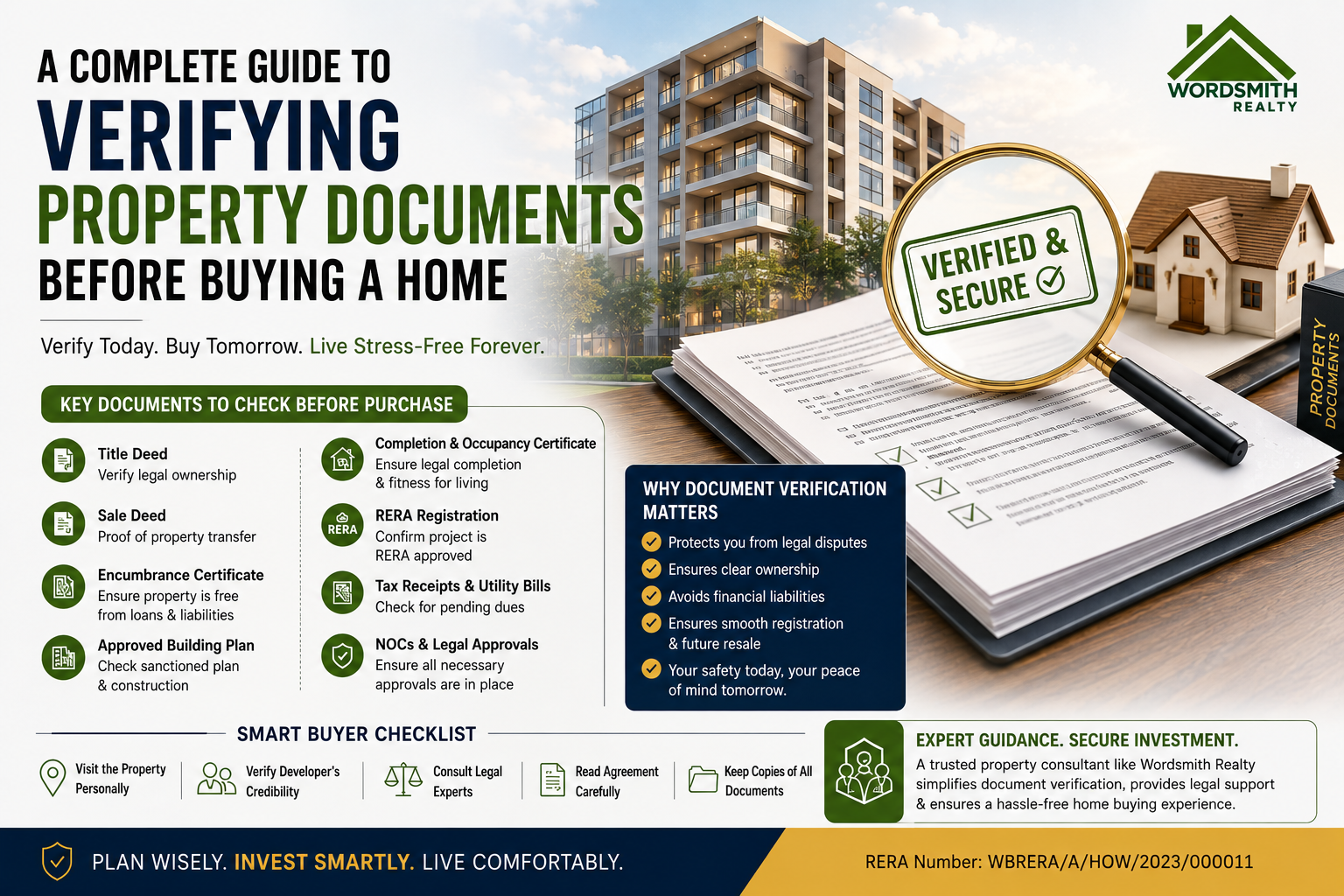
Buying a home is one of the most noteworthy financial decisions you will ever make. Whether you are purchasing your first apartment or expanding your investment portfolio, ensuring the property's legal authenticity is just as important as evaluating its location, amenities, or price. Many buyers focus on finding the picture-perfect home but overlook the legal due diligence required before signing the agreement.
A thorough document verification procedure protects you from future disputes, hidden liabilities, fraudulent transactions, and ownership issues. If you are exploring Flats for Sale in Kolkata, understanding the legal aspects of a property purchase can save you from costly mistakes and provide complete peace of mind.
In this guide, we'll explain the essential property document verification process, the key legal documents you should examine, and how professional property consultants can simplify your home-buying journey.
Why Property Verification Matters
The real estate market offers countless opportunities, but every property should undergo a legal verification process before purchase. Even attractive pricing or premium amenities cannot compensate for legal complications that may arise later.
Verifying documents helps you:
- Confirm the seller's legal ownership.
- Ensure the property is free from legal disputes.
- Check whether approvals have been obtained from relevant authorities.
- Avoid purchasing encumbered or mortgaged properties.
- Ensure smooth registration and future resale.
Spending a little time on legal verification today can prevent years of legal complications in the future.
Essential Documents to Check Before Buying Property
One of the most common mistakes buyers make is assuming that every project has already completed all legal formalities. Instead, verify each document independently or through a legal expert.
1. Title Deed
The title deed establishes the seller's ownership rights over the property. Verify that:
- The seller is the lawful owner.
- The title is clear and marketable.
- There are no ownership disputes.
- Previous ownership records are properly documented.
A clear title is the foundation of every safe property transaction.
2. Sale Deed
The Sale Deed is the legal document that transfers ownership from the seller to the buyer. Ensure it has been properly executed and registered with the appropriate authority.
Compare the details mentioned in the Sale Deed with the actual property specifications to ensure complete consistency.
3. Encumbrance Certificate
An Encumbrance Certificate confirms whether the property carries any financial liabilities such as loans, mortgages, or legal claims.
Ideally, the certificate should indicate that the property is free from encumbrances for the required period.
4. Approved Building Plan
Always verify whether the construction has been approved by the local municipal authority or development authority.
Compare the sanctioned plan with the actual construction to ensure there are no unauthorized modifications.
5. Completion Certificate
For completed residential projects, the Completion Certificate confirms that construction has been carried out according to approved plans and complies with applicable building regulations.
This document is particularly important for obtaining utility connections and ensuring legal compliance.
6. Occupancy Certificate
The Occupancy Certificate certifies that the building is fit for residence and meets all required safety and regulatory standards.
Avoid taking possession of a completed property if this certificate is unavailable.
7. RERA Registration
Before investing in an under-construction project, verify its registration under the Real Estate Regulatory Authority (RERA).
The registration provides transparency regarding:
- Project approvals
- Completion timelines
- Developer details
- Construction progress
It also strengthens buyer protection against project delays and misleading claims.
8. Tax Payment Receipts
Request copies of recent property tax receipts to ensure there are no outstanding municipal dues.
Unpaid taxes may eventually become the responsibility of the new owner after purchase.
9. Utility Bills
Review electricity, water, maintenance, and other utility bills to confirm there are no pending payments.
This helps avoid unexpected liabilities after possession.
10. No Objection Certificates (NOCs)
Depending on the project, various NOCs may be required from:
- Fire Department
- Pollution Control Authority
- Airport Authority (where applicable)
- Water Supply Authority
- Electricity Department
These approvals indicate that the project complies with regulatory norms.
Practical Tips for a Safe Property Purchase
Apart from checking legal documents, buyers should also follow a few practical precautions:
- Visit the property personally before making any payment.
- Verify the developer's reputation and project history.
- Cross-check all carpet area and super built-up area calculations.
- Read every clause in the Agreement for Sale carefully.
- Avoid making large cash payments.
- Keep copies of every document and payment receipt.
- Consult a qualified legal expert before registration.
A systematic verification process significantly reduces the risk of future legal disputes.
Common Red Flags Buyers Should Never Ignore
While inspecting documents, remain cautious if you notice:
- Mismatch in owner names across documents.
- Missing approvals from statutory authorities.
- Incomplete registration records.
- Pending court cases involving the property.
- Large outstanding loans against the project.
- Pressure from sellers to make immediate payments.
- Significant price differences compared to nearby properties without a valid explanation.
These warning signs deserve careful investigation before proceeding.
Why Choosing a Property Consultant Like Wordsmith Realty Makes the Process Easier
Buying a home involves much more than selecting the right apartment. Legal paperwork, documentation, negotiations, builder credibility, and compliance checks can quickly become overwhelming, especially for first-time buyers.
This is where an experienced property consultant like Wordsmith Realty adds significant value.
Their professional assistance includes:
- Preliminary verification of project credentials.
- Guidance on essential legal documentation.
- Coordination with developers and legal professionals.
- Assistance throughout booking, agreement, and registration.
- Transparent communication during every stage of the buying process.
- Helping buyers compare projects based on both legal compliance and investment potential.
Instead of navigating complicated paperwork alone, buyers benefit from expert guidance that saves time, minimizes risks, and creates a smoother purchasing experience. With professional support, you can focus on choosing the right home while experienced consultants help ensure that the transaction proceeds with greater confidence and transparency.
Frequently Asked Questions (FAQs)
1. Which documents should I verify before purchasing a property?
The most important documents include the Title Deed, Sale Deed, Encumbrance Certificate, approved building plan, Completion Certificate, Occupancy Certificate, RERA registration, tax receipts, utility bills, and applicable No Objection Certificates.
2. Why is a Title Deed important?
A Title Deed confirms the legal ownership of the property and ensures that the seller has the right to transfer ownership to the buyer.
3. How can I check if a property has any outstanding loans?
An Encumbrance Certificate helps identify whether the property is mortgaged or carries any legal or financial liabilities.
4. Is RERA registration mandatory?
For most eligible residential projects, RERA registration is required. Buyers should always verify the project's registration details before investing.
5. Can I verify property documents without a lawyer?
While basic document checks can be performed independently, consulting a qualified legal expert or an experienced property consultant is highly recommended for complete legal due diligence.
6. Why should I work with a professional property consultant?
A professional consultant simplifies the buying process by coordinating documentation, assisting with legal checks, communicating with developers, and helping buyers make informed decisions with greater confidence.
Final Thoughts
Purchasing a property is an exciting milestone, but excitement should never replace due diligence. Every buyer should carefully verify ownership records, legal approvals, financial liabilities, and regulatory compliance before making a commitment.
A well-informed decision not only protects your investment but also ensures long-term peace of mind. By taking the time to review all essential documents and seeking professional assistance, when necessary, you can move forward with confidence and make your dream home a secure reality.
